Subtitles/Captions
Real-time captions improve comprehension when audio clarity is low and reduce communication fatigue.
How might we improve the communication process for people with SSHL/hearing loss?
How might we make it easier for people with SSHL to understand and communicate with other people?
We conducted user research to understand the lived experiences of people with SSHL through interviews, surveys, and contextual observations. These findings informed the product priorities and accessibility decisions in Signwave.
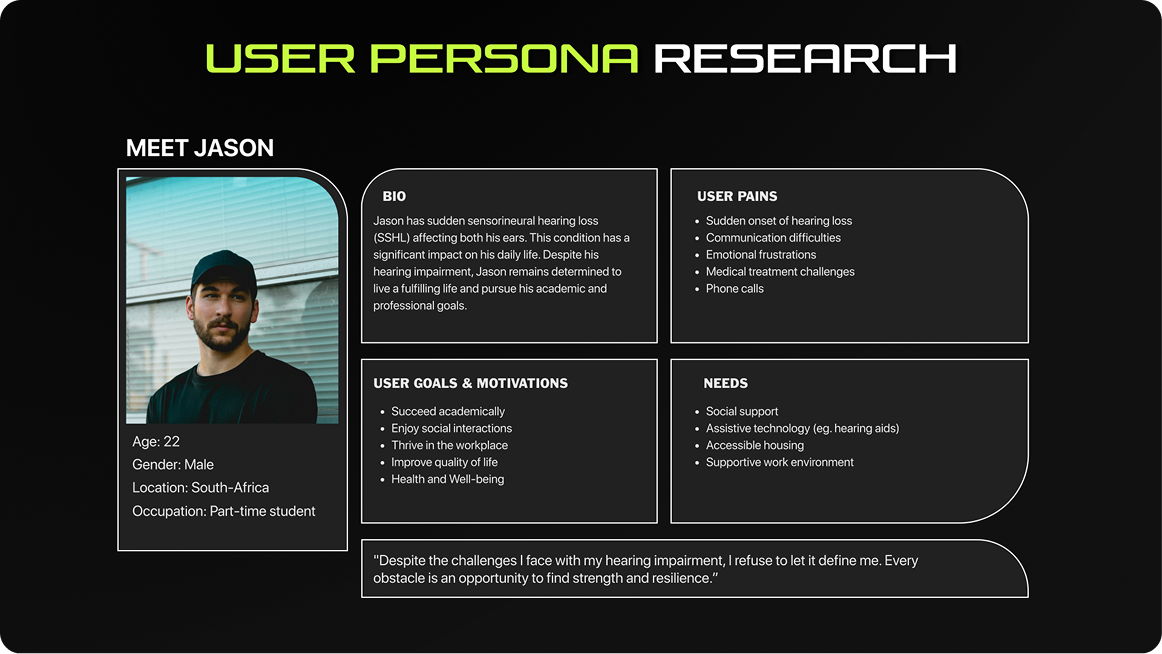
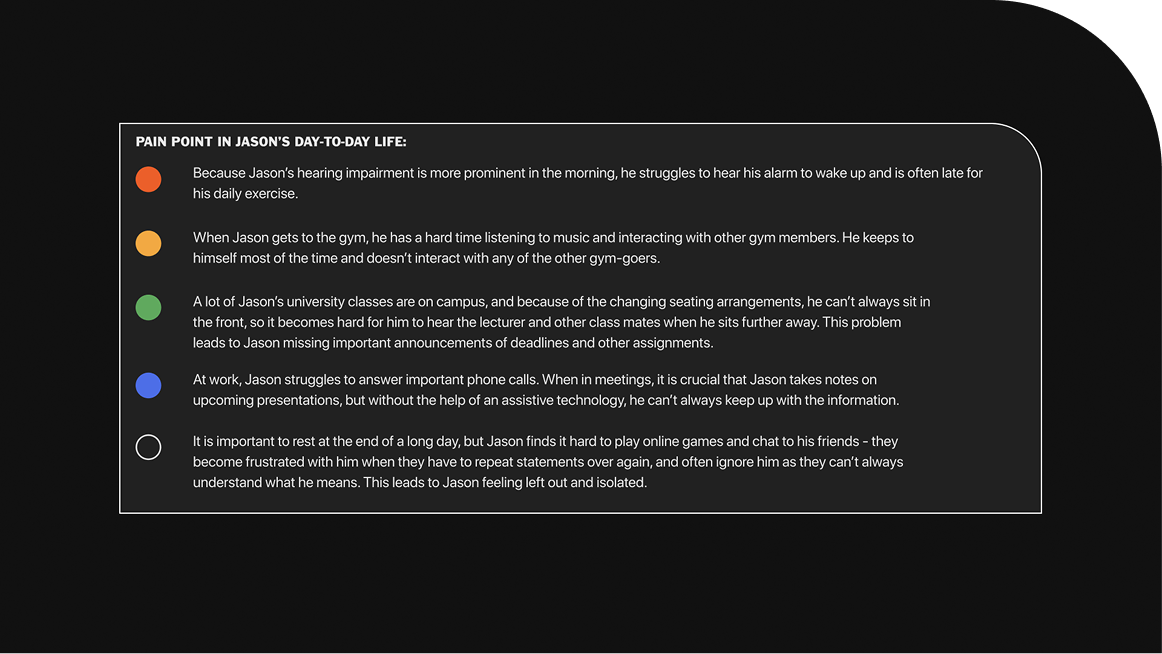
Jason's profile highlights how SSHL can disrupt communication in both personal and public contexts. SSHL can occur suddenly, and in many cases the cause remains unknown. Delayed diagnosis or treatment can reduce the chance of hearing recovery, making timely support systems critical.
The Signwave experience is guided by accessibility-first interaction patterns that prioritize visual clarity, communication confidence, and inclusive feedback.
Real-time captions improve comprehension when audio clarity is low and reduce communication fatigue.
Media controls emphasize transcript access, playback control, and configurable sound output.
Critical actions pair audio cues with visual indicators so users never miss important status feedback.
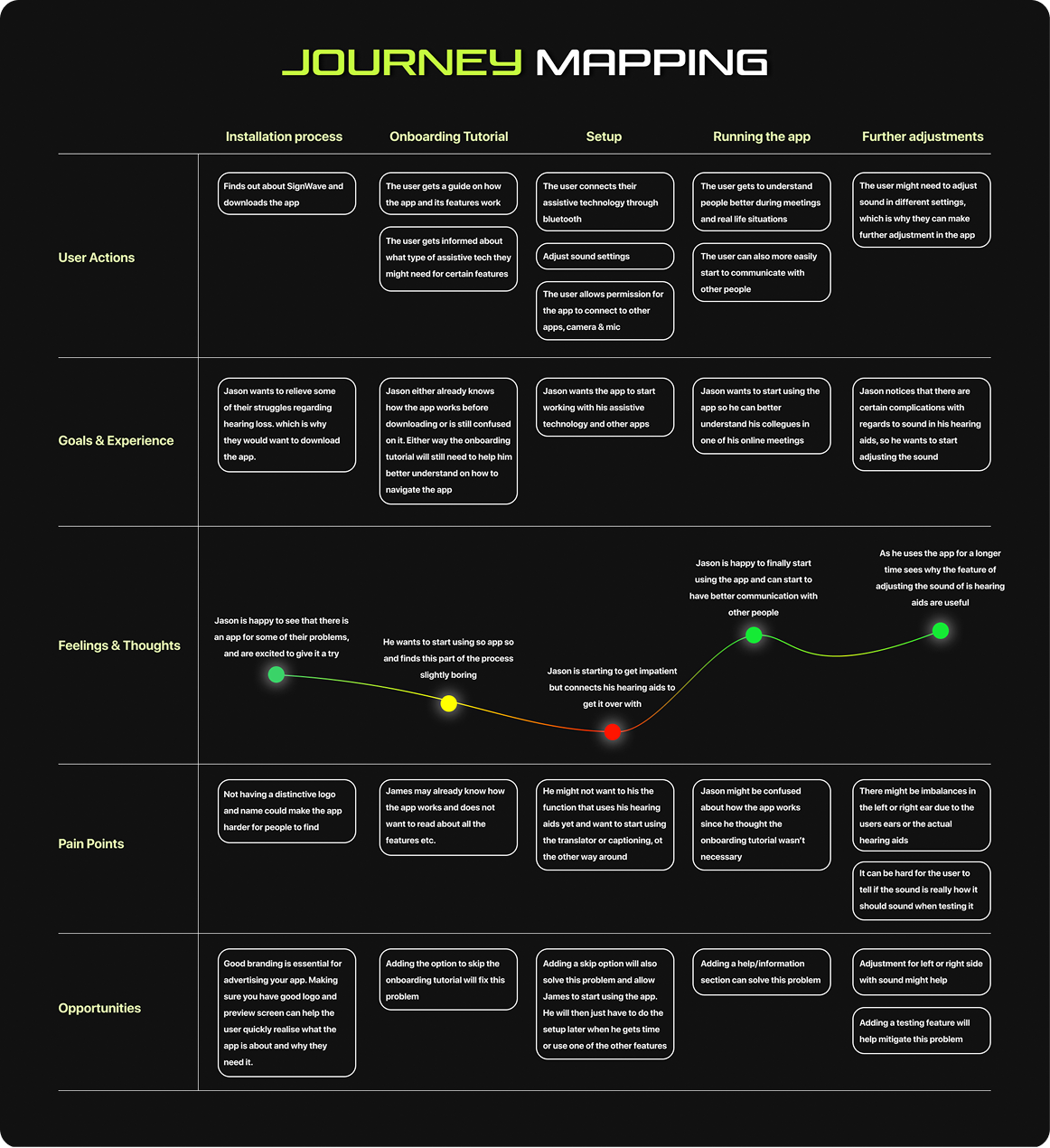
Journey maps were used to visualize communication breakdown points and identify where Signwave can provide high-value support moments.
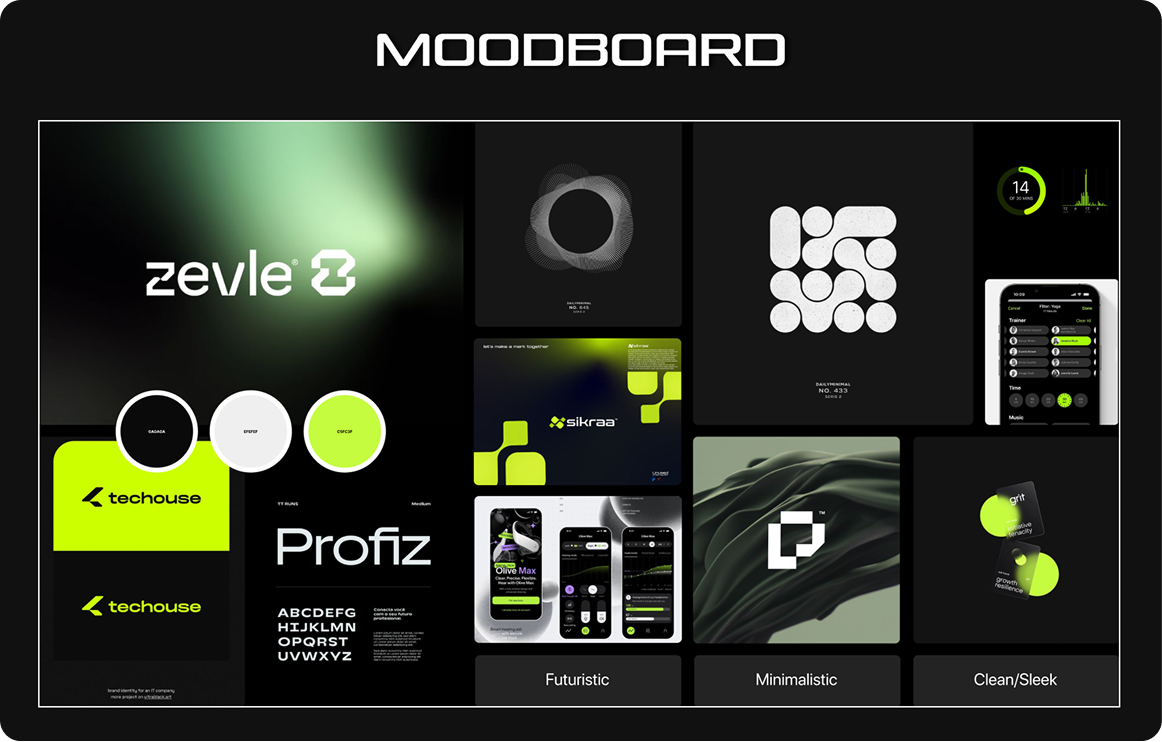
The moodboard explores accessible visual language with high contrast, simple hierarchy, and a modern, reassuring tone.
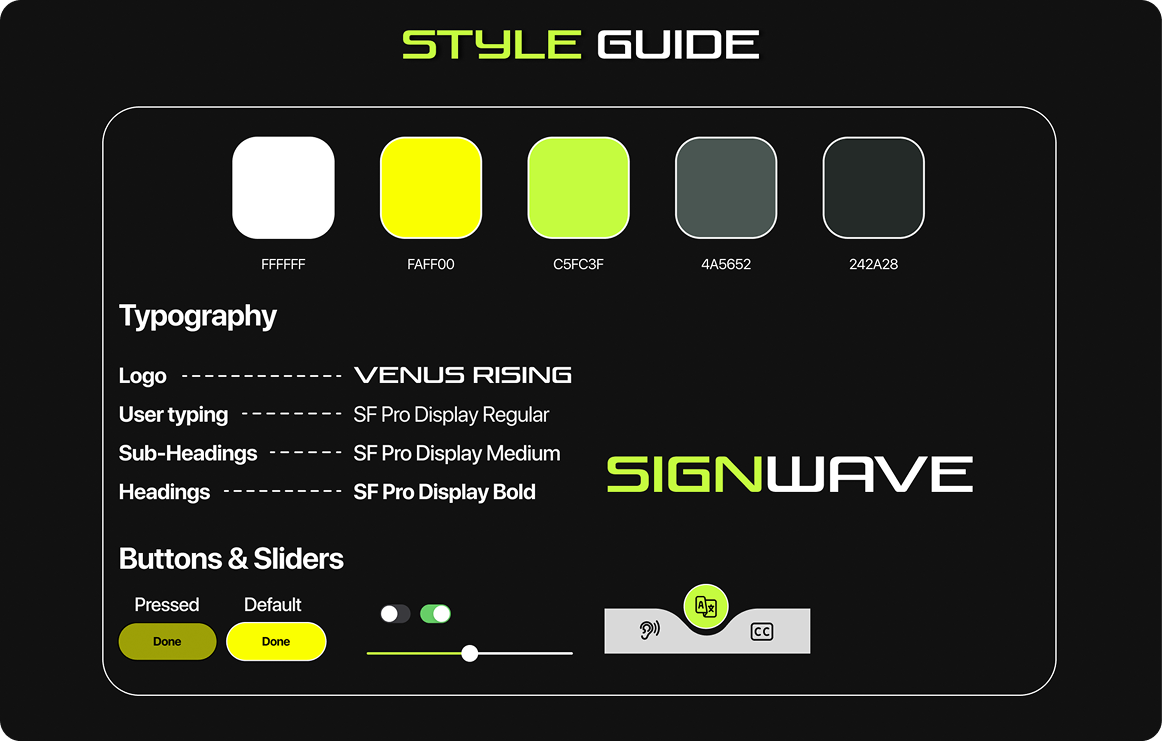
The style guide defines typography, color, and component behavior for a consistent and inclusive communication experience across the app.