Design Challenge
Investigate and identify a problem in a small local industry and respond by designing an e-commerce website with a clear user journey and considerations for the trade and their markets.
Problem Frame
Informal traders face challenges growing their business due to limited public presence and inefficient sales methods. Traders also face difficulties in managing their inventory, processing payments, and handling customer orders, often without the support of digital tools.
Solution
An e-commerce website for informal traders that's easy to understand, and helps traders manage their finances, stock and orders.
Design Process
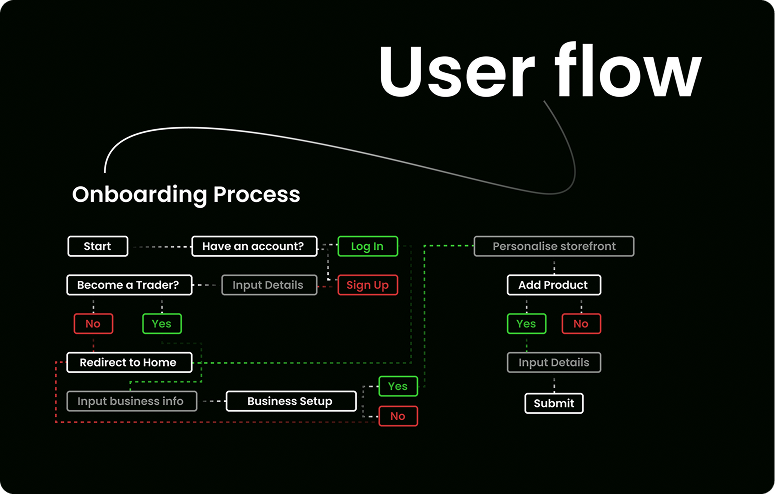
The design process began with in-depth research into the daily challenges faced by informal traders, including lack of digital litracy, limited access to banking tools, and platform fees that cut into already narrow profit margins. From there, I mapped user journeys, identified key touchpoints, and prioritised features that would simplify their workflow without overwhelming them. The final design focused on clarity, trust, and functionality-ensuring that even first-time digital users could set up a store, track their income, and manage stock confidently.
Challenges with Informal Trade
Informal businesses are not legal persons, and as such the owners are liable to personal losses in the case of debt/legal problems - the losses are not localized only to the business' assets.
Benefits of Informal Trade
Informal traders are not as rigid as formal traders, and can react more quickly to the consumers' needs. They are also much closer to the consumers, and can get direct information on trends.
Solution Strategies
Customizable storefronts help support product and business branding, branding attracts more customers and increases buyer likely-hood.
Adding a system where traders can easily track how much stock they have left as well as financial analytics can save traders a lot of time.
Include a review section where customers can provide feedback on products and the overall buying experience.
Traders will not have to pay to sel products on the application as a Google Ads system will be included to make revenue to host the app.
KPI's (Key Performance Indicators)
Users should be able to easily understand and engage with the website. Those who are not technologically inclined should be able to easily use the website.
Users should be able to make a similar or better profit from the website when compared to markets.
Users should be able to sell their products to anyone, no matter where they are in comparison by shipping and seeing addresses.
Users should be held accountable, and should have access to all of their transactions in an easy to understand manner.
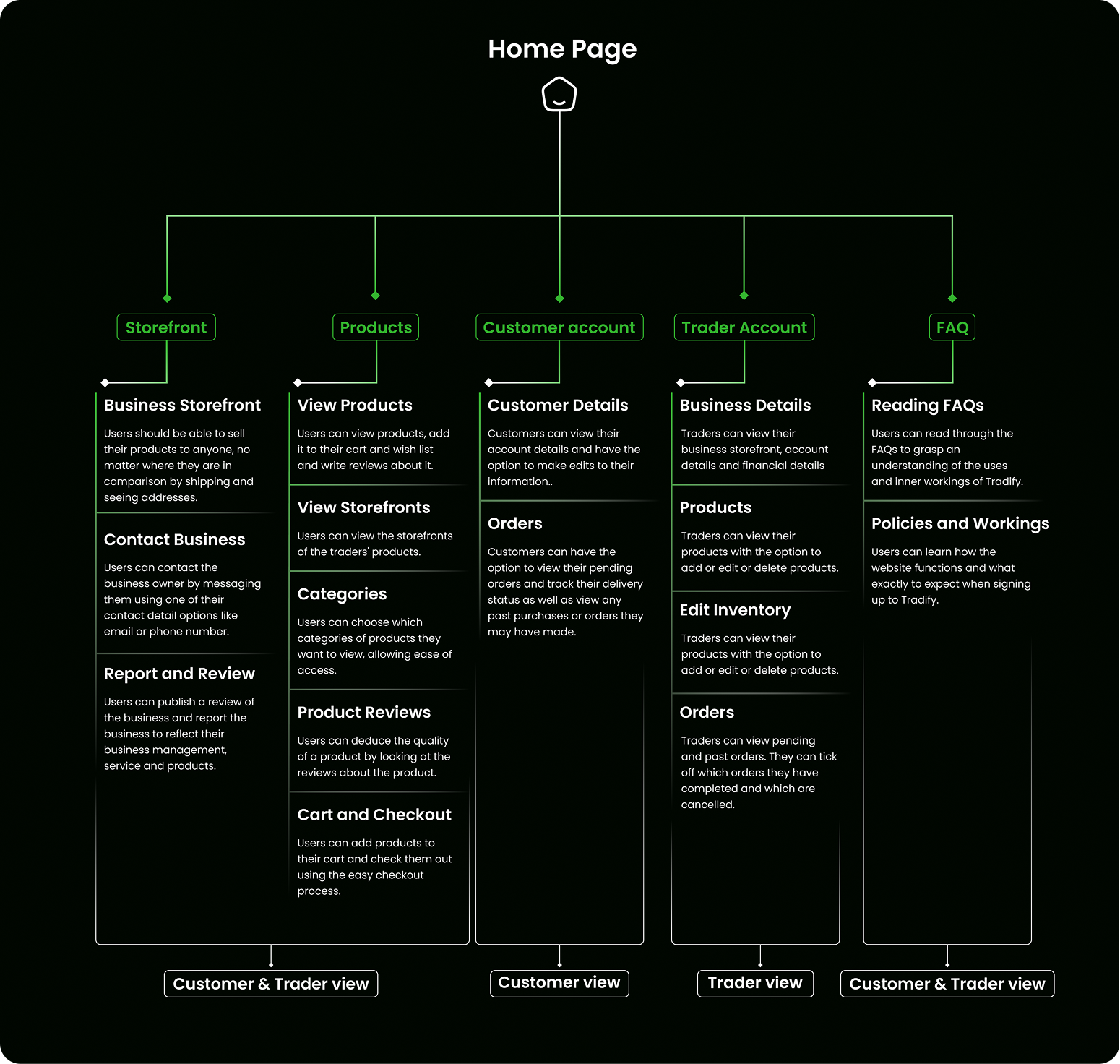
Usermap
The interface design prioritizes simplicity and intuitive navigation, ensuring that even users with limited digital experience can easily create and manage their online stores.
Userflow
Through iterative testing with real informal traders, we refined the platform to ensure it met their practical needs and workflow requirements. User feedback was incorporated throughout the development process.